{"title":"Off-Grid Luxury Near Sequoia: 5 Wild Escapes Asia Travelers Must Try","html":"
What Is the Off-Grid Luxury Trend Redefining Weekend Escapes in 2025?
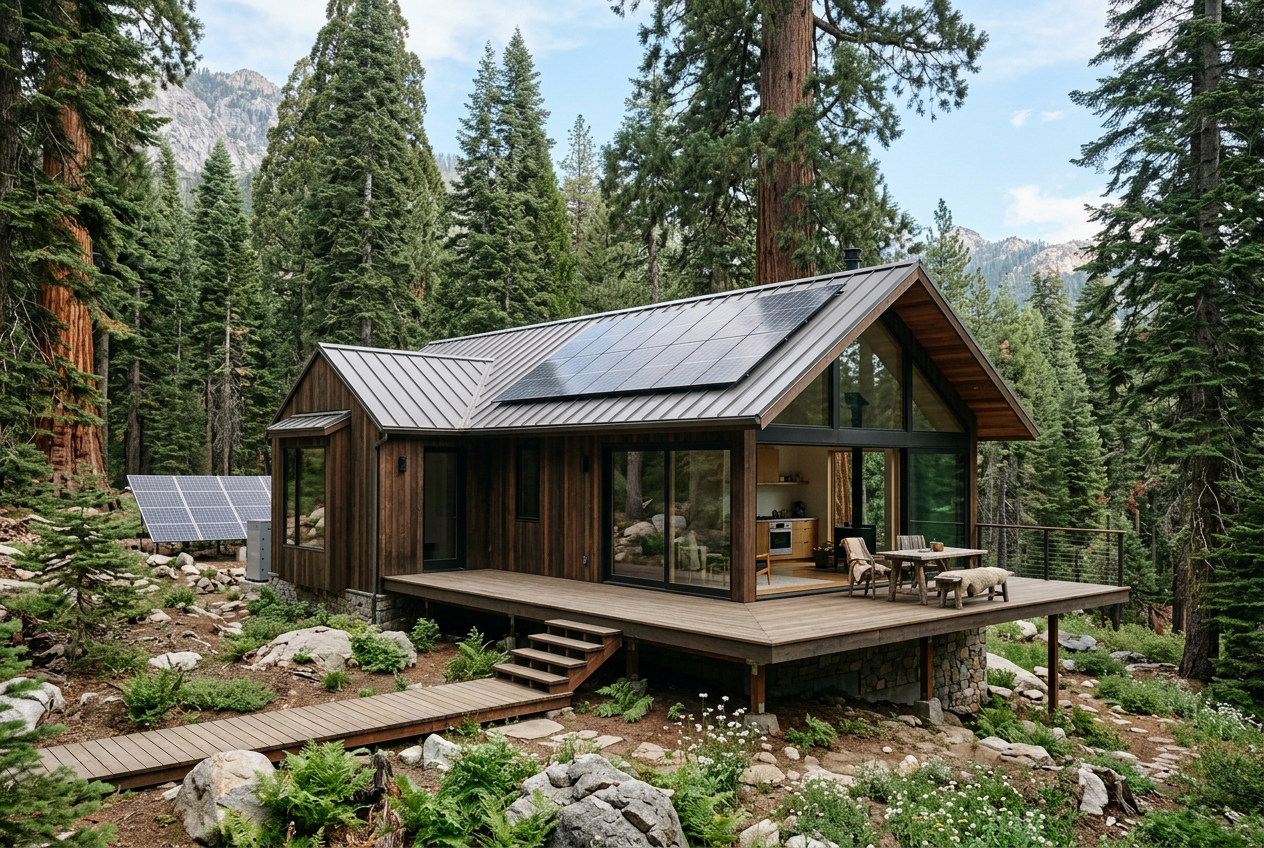
Off-grid luxury is the fastest-growing segment in experiential travel, with data from Virtuoso's 2024 Luxe Report showing a 38 percent year-on-year surge in bookings for remote, self-sustaining retreats among high-net-worth travelers based in Asia. The trigger is simple: after years of hyper-connected urban living, the UHNW traveler no longer wants a fifth rooftop bar — they want 2.4 acres of silence, a sky uncontaminated by city light, and a bed that costs more than most people's rent precisely because it exists where nothing else does. The benchmark has shifted from thread counts to solar panels, from butler service to genuine wilderness. A recently listed modern pavilion near California's Lone Pine — a two-bedroom architectural statement on rugged high-desert terrain close to Sequoia National Park, priced at USD 1.7 million — crystallises exactly what this cohort is chasing: a private compound where the grid is optional and the landscape is the amenity.
For the Asia-based reader, this Californian listing is less a real-estate transaction and more a mood board. It signals a global design and hospitality philosophy that is now being replicated — and in several cases surpassed — across the Asia-Pacific region. From the volcanic highlands of Hokkaido to the limestone karst of Palawan, a new generation of off-grid retreats is being built for people who understand that true luxury means consuming less of the world while experiencing more of it. If you have been waiting for a long weekend that genuinely resets your nervous system, these properties are where you book first.
"The most coveted address in luxury travel is no address at all — just coordinates, solar power, and a horizon with nothing built on it." — Luxury Weekend Asia
Why Are Asia's Off-Grid Retreats Outperforming Traditional Five-Star Hotels?
Asia's off-grid retreats are outperforming traditional five-star hotels on guest satisfaction scores because scarcity, not service ratios, now drives perceived value among ultra-high-net-worth travelers. The Lone Pine pavilion model — minimal footprint, maximum drama — has found its most ambitious interpreters in Asia, where ancient landscapes and progressive sustainability architecture collide in ways that no European grand hotel can replicate. Amanjiwo in Central Java, overseen by General Manager Rudi Wedekind, remains the continent's most cited benchmark: 36 free-standing suites built from local andesite stone, each oriented toward the ninth-century Borobudur temple complex, with rates starting at USD 1,800 per night. The property runs on a partial solar grid, sources 70 percent of its produce within a 10-kilometer radius, and has a minimum two-night stay — a booking lead time that stretches to three months during the Vesak festival season.
Further east, Bawah Reserve in the Riau Archipelago of Indonesia — accessible only by seaplane from Singapore's Seletar Airport — operates on 100 percent renewable energy across its six private islands. Rates begin at USD 1,200 per person per night on a full-board basis, and the resort's marine biologist, Dr. Sari Wijayanti, leads dawn snorkel briefings that have become the property's most-requested experience. Bawah limits total occupancy to 66 guests at any one time, a deliberate constraint that keeps the reef undisturbed and the experience irreplaceable. For Asia-Pacific travelers who measure a weekend by what they remember rather than what they photographed, this kind of enforced scarcity is the point.
How Does Off-Grid Architecture Work in Extreme Asian Landscapes?
Off-grid architecture in extreme Asian landscapes works by treating the site's constraints — altitude, monsoon cycles, seismic activity, remoteness — as the primary design brief rather than obstacles to overcome. The Lone Pine pavilion near Sequoia uses passive solar orientation and rainwater harvesting as its structural logic; the best Asian equivalents apply the same thinking at greater scale and with deeper cultural specificity. Azerai Can Tho in Vietnam's Mekong Delta, founded by Adrian Zecha — the hotelier who also created Aman Resorts — floats its 59 villas on the river itself, using tidal rhythms to naturally regulate room temperature and eliminate the need for conventional air-conditioning infrastructure. Rates at Azerai Can Tho start at USD 320 per night, making it the most accessible property on this list without sacrificing the sense of profound geographic remove.
In Japan, Zaborin in Hokkaido's Niseko region is a ryokan that operates two private onsen-fed pools per villa using geothermal energy drawn directly from the volcanic aquifer beneath the property. Head chef Daisuke Mori sources every ingredient from within Hokkaido prefecture, and a kaiseki dinner for two — 12 courses, sake pairing included — is priced at approximately JPY 45,000 (around USD 300) per person. The property's 15 detached suites are booked an average of four months in advance during the powder-snow season between December and February, and the minimum stay is two nights throughout the year. The architecture, designed by Satoshi Okada Architects, uses local larch timber and volcanic stone in a vocabulary that feels simultaneously ancient and rigorously contemporary — exactly the tension that defines the best off-grid luxury.
Who Is This For?
This article is for the Asia-based UHNW traveler who already owns the penthouse and has stayed in every flagship urban hotel — and who now finds the greatest status signal in a weekend where the phone has no signal. Specifically, this is for the Singapore or Hong Kong professional who can absorb a USD 1,200-per-night nightly rate without restructuring their finances, who travels with a partner or a maximum of three close friends, and who considers a helicopter transfer from the nearest airport a reasonable line item rather than an extravagance. It is also for the sustainability-conscious executive who wants their leisure spending to leave a measurable positive footprint — reef restoration at Bawah, rice-paddy conservation at Amanjiwo, forest regeneration at Zaborin.
The comparison below maps the five key properties referenced against the criteria that matter most to this reader:
- Amanjiwo, Java, Indonesia — from USD 1,800/night; 36 suites; 3-month lead time in peak season; Borobudur orientation; General Manager Rudi Wedekind.
- Bawah Reserve, Riau Archipelago, Indonesia — from USD 1,200 per person per night all-inclusive; 66-guest maximum; seaplane access only; marine biologist on staff.
- Azerai Can Tho, Mekong Delta, Vietnam — from USD 320/night; 59 river villas; founded by Adrian Zecha; tidal cooling system.
- Zaborin Ryokan, Niseko, Hokkaido, Japan — from USD 900/night; 15 suites; geothermal onsen; kaiseki dinner USD 300 per person; designed by Satoshi Okada Architects.
- El Nido Resorts Apulit Island, Palawan, Philippines — from USD 650/night; solar-powered island; 50-guest cap; accessible by light aircraft from Puerto Princesa.
Every property on this list operates with a hard occupancy ceiling — book early or the weekend simply does not happen.
What to Watch: Key Dates and Openings Ahead
Several properties are expanding their off-grid footprints in the next 12 months, and Asia-based travelers should note these dates now. Aman is confirmed to open Aman Nai Lert Bangkok in late 2025, but more relevant to this readership is the brand's planned wilderness camp in Bhutan's Phobjikha Valley, expected to debut in Q1 2026 with a reported rate of USD 2,500 per night inclusive of all experiences and a strict 10-guest maximum. Bawah Reserve has announced a new overwater villa cluster scheduled for completion in November 2025, adding eight units and a dedicated stargazing deck designed in consultation with the Jakarta Planetarium. Zaborin is introducing a dedicated forest-bathing programme led by a certified shinrin-yoku guide beginning December 2025, priced at JPY 12,000 per session and available exclusively to in-house guests.
For the traveler inspired by the Lone Pine pavilion's promise of 2.4 acres of unmediated wilderness, the action item is not to search for a Californian property listing — it is to open a reservation window for one of the properties above before the season closes. The most important booking you make this quarter is the one that takes you entirely off the map. Start with Bawah Reserve's reservations team at the contact below, or reach Zaborin directly through their English-language concierge line to secure the December kaiseki calendar before it fills.
Bawah Reserve
📍 Riau Archipelago, Indonesia (seaplane from Seletar Airport, Singapore)
📞 +62 778 412 8888
🌐 bawahreserve.com
Amanjiwo
📍 Borobudur, Central Java, Indonesia
📞 +62 293 788 333
🌐 aman.com/resorts/amanjiwo
Zaborin Ryokan
📍 Hanazono, Niseko, Hokkaido, Japan
📞 +81 136 23 3388
🌐 zaborin.com
Azerai Can Tho
📍 Can Tho, Mekong Delta, Vietnam
📞 +84 292 368 8888
🌐 azerai.com
Frequently Asked Questions
What is off-grid luxury travel and how does it differ from eco-tourism?
Off-grid luxury travel is a category of high-end hospitality where properties operate independently of municipal power, water, or waste infrastructure — using solar, geothermal, rainwater, or tidal systems — while maintaining five-star service standards. It differs from eco-tourism in price point, design ambition, and the expectation of complete privacy; eco-tourism prioritises access and education, while off-grid luxury prioritises exclusivity and sensory immersion.
How far in advance should I book an off-grid luxury retreat in Asia?
Booking lead times vary by property and season, but as a general rule, peak-season reservations at properties like Amanjiwo or Bawah Reserve require three to four months of advance notice. Shoulder-season windows at Zaborin in Hokkaido can sometimes be secured six to eight weeks out, but the December-February powder season books within days of availability opening.
Are off-grid Asia resorts suitable for families with children?
Several properties welcome children, including Azerai Can Tho and El Nido Resorts Apulit Island, both of which offer guided nature programmes for younger guests. However, properties like Zaborin and Bawah Reserve are designed primarily for couples and small adult groups, and their intimate scale means children under 12 are either restricted or actively discouraged — confirm directly with the property before booking.
What is the typical all-inclusive rate for a weekend at Bawah Reserve?
Bawah Reserve rates start at approximately USD 1,200 per person per night on a full-board basis, which includes all meals, non-motorised water sports, guided snorkelling, and the seaplane transfer from Singapore's Seletar Airport. A two-night stay for two guests therefore starts at approximately USD 4,800 before optional excursions or spa treatments.
Which Asia off-grid resort has the strongest sustainability credentials?
Bawah Reserve is widely cited as the benchmark, operating on 100 percent renewable energy, maintaining an active coral restoration programme overseen by resident marine biologist Dr. Sari Wijayanti, and holding a no-single-use-plastic policy across all six islands. Amanjiwo and Zaborin are close competitors, both sourcing the majority of their food locally and using architecture that minimises site disturbance.
","meta_title":"Off-Grid Luxury Retreats in Asia: Rates, Reviews & Bookings","meta_description":"Discover Asia's best off-grid luxury retreats — from Bawah Reserve to Zaborin Hokkaido. Rates, booking lead times, and expert picks for UHNW weekend travelers.","focus_keyword":"off-grid luxury retreats Asia","keywords":["off-grid luxury travel Asia","Bawah Reserve review","Amanjiwo rates","Zaborin Hokkaido","luxury wilderness retreat","Asia UHNW travel","sustainable luxury hotel Asia","remote resort Asia Pacific"],"tldr":"Asia's best off-grid luxury retreats — Bawah Reserve, Amanjiwo, Zaborin, and Azerai Can Tho — offer solar-powered seclusion, strict guest caps, and rates from USD 320 to USD 1,800 per night. Book three to four months ahead for peak season.","faqs":[{"q":"What is off-grid luxury travel and how does it differ from eco-tourism?","a":"Off-grid luxury travel means five-star properties that operate independently of municipal infrastructure using solar, geothermal, or tidal systems, with complete privacy and high design standards. Eco-tourism prioritises access and education at lower price points; off-grid luxury prioritises exclusivity and immersive wilderness experiences."},{"q":"How far in advance should I book an off-grid luxury retreat in Asia?","a":"Peak-season bookings at Amanjiwo or Bawah Reserve require three to four months advance notice. Zaborin's December-February powder season fills within days of availability opening. Shoulder-season windows can sometimes be secured six to eight weeks out."},{"q":"Are off-grid Asia resorts suitable for families with children?","a":"Azerai Can Tho and El Nido Resorts Apulit Island welcome families with guided nature programmes. Zaborin and Bawah Reserve are designed primarily for couples and adult groups; children under 12 may be restricted. Always confirm directly with the property."},{"q":"What is the typical all-inclusive rate for a weekend at Bawah Reserve?","a":"Rates start at USD 1,200 per person per night all-inclusive, covering meals, water sports, guided snorkelling, and the seaplane transfer from Singapore's Seletar Airport. A two-night stay for two guests starts at approximately USD 4,800 before optional extras."},{"q":"Which Asia off-grid resort has the strongest sustainability credentials?","a":"Bawah Reserve is the benchmark: 100 percent renewable energy, active coral restoration led by marine biologist Dr. Sari Wijayanti, and a no-single-use-plastic policy across six private islands. Amanjiwo and Zaborin are close competitors with strong local-sourcing and low-impact architecture programmes."}],"entities":{"people":["Rudi Wedekind","Adrian Zecha","Dr. Sari Wijayanti","Daisuke Mori","Satoshi Okada"],"organizations":["Aman Resorts","Bawah Reserve","Azerai","Zaborin","El Nido Resorts","Virtuoso","Jakarta Planetarium"],"places":["Amanjiwo","Bawah Reserve","Zaborin","Azerai Can Tho","Lone Pine","Sequoia National Park","Owens Valley","Riau Archipelago","Hokkaido","Mekong Delta","Palawan","Phobjikha Valley","Seletar Airport"]}}