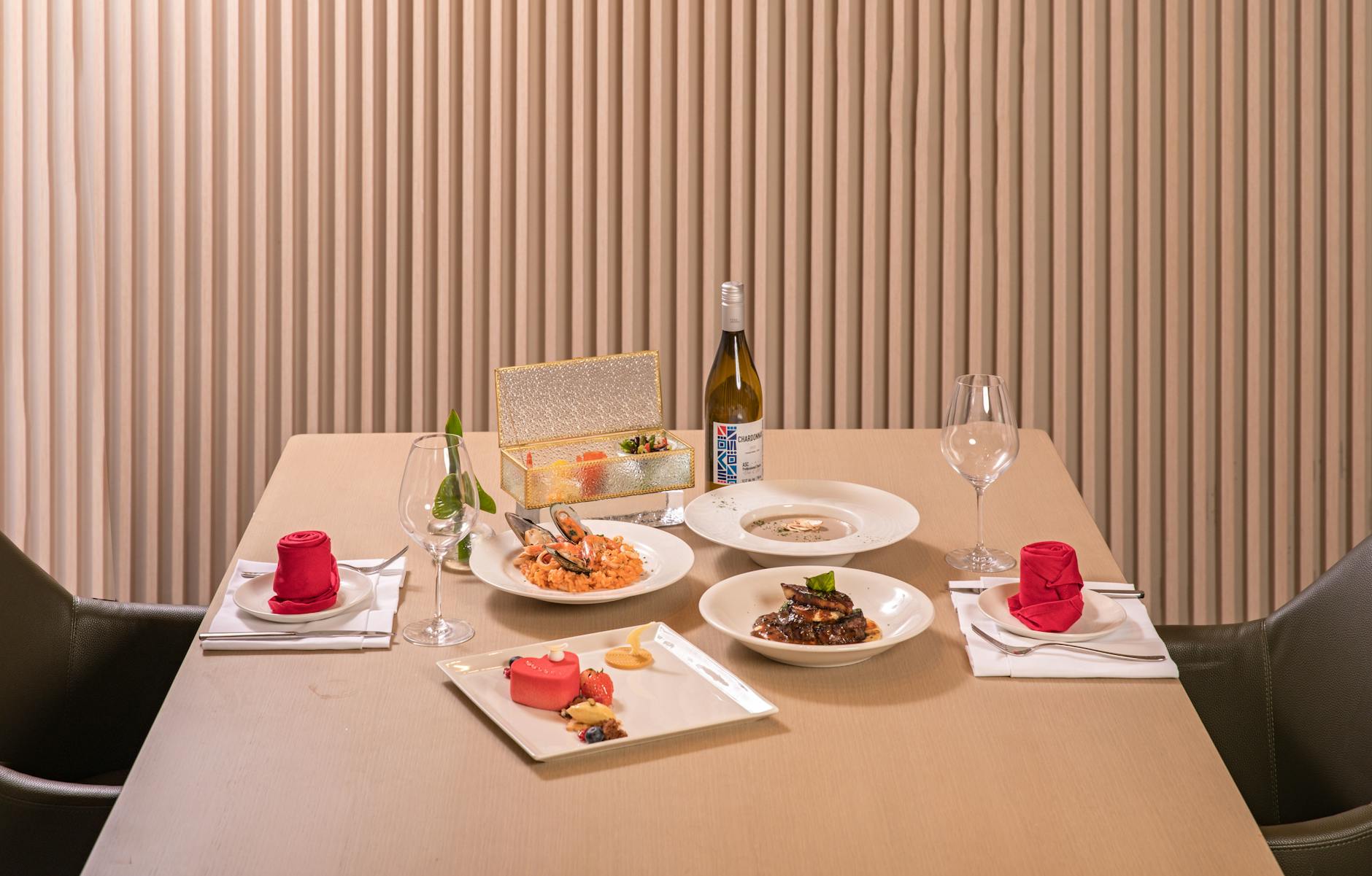
Greece's wealthiest travellers are moving beyond Santorini and Mykonos, discovering the Peloponnese, Folegandros, Epirus, and Thessaloniki for private coastlines, mountain retreats, philosopher sessions, and world-class dining — all accessible by private charter from Asia.
TL;DR: Greece's most discerning travellers are bypassing Santorini and Mykonos in favour of four under-the-radar destinations offering private coastlines, mountain retreats, philosopher sessions, and bespoke cultural immersion — all worthy of a long-haul luxury weekend from Asia.
Where the Wealthy Are Travelling to in Greece
Greece has always seduced travellers with its cobalt waters and ancient ruins, but for those who measure a journey by the depth of its silence rather than the size of its infinity pool, the country's most compelling chapters are being written far from the selfie crowds of Oia and Little Venice. A new wave of ultra-high-net-worth travellers — many flying in on private charters from Singapore, Hong Kong, and Tokyo — are seeking out corners of Greece that reward curiosity over convenience. These are places where the wine is poured by the family who pressed it, where a historian might join you for dinner, and where the sea belongs, for a moment, entirely to you.
The Peloponnese: Ancient Roads, Modern Indulgence
The Peloponnese peninsula has long been overshadowed by the islands, yet it offers something the islands rarely can: genuine depth. The medieval citadel of Mystras, a UNESCO World Heritage Site, rises above olive groves and Byzantine frescoes in a landscape that feels untouched by the twenty-first century. Luxury travellers are booking private guided tours of the site at dawn — before the heat and the day-trippers arrive — followed by long lunches at estate-run tavernas serving slow-braised lamb and barrel-aged Mavrodaphne wine. Amanzoe, the Aman resort perched above the Argolic Gulf near Porto Heli, remains the region's most coveted address, with its colonnade pavilions, private beach club, and a spa that draws on ancient Greek therapeutic rituals using local herbs and sea minerals.
- Signature experience: Private dawn tour of Mystras followed by an estate wine lunch
- Stay: Amanzoe, Porto Heli — pavilion pool villas from approximately €2,500 per night
- Best time to visit: May, June, and September for optimal weather and fewer visitors
Amanzoe
📍 Porto Heli, Peloponnese, Greece
📞 +30 27540 72000
🌐 Website
Epirus: Mountain Retreats and the Road Less Taken
In Greece's mountainous northwest, the region of Epirus offers a dramatically different register of luxury — one measured in cool air, stone-built villages, and the kind of stillness that recalibrates the nervous system. The Zagori villages, a cluster of 46 stone-paved settlements connected by arched Ottoman bridges, have become a quiet obsession among travellers who have already done the islands several times over. Astra Suites and boutique properties like Aristi Mountain Resort have elevated the local accommodation scene considerably, offering fireside dining rooms, foraging walks led by local botanists, and private access to the Vikos Gorge — one of the deepest canyons in the world. For the intellectually curious, some operators now arrange private sessions with philosophers and historians from the University of Ioannina, a nod to the region's deep roots in Greek learning.
Aristi Mountain Resort
📍 Aristi Village, Zagori, Epirus, Greece
📞 +30 26530 41330
🌐 Website
Folegandros: The Island That Refuses to Hurry
Folegandros is what Santorini might have been before the cruise ships arrived. This small Cycladic island — reachable by ferry or, increasingly, by private speedboat transfer from Santorini — has no airport, no casino, and no international hotel chains, and its residents appear entirely satisfied with all three absences. The whitewashed Chora sits on a cliff edge with views that rival anything in the Aegean, and the island's handful of boutique properties, including the much-praised Anemi Hotel, offer suites with private terraces, locally sourced breakfasts, and an atmosphere of considered calm that money alone cannot manufacture. Folegandros rewards those willing to trade spectacle for authenticity, and for Asia-based travellers accustomed to the frictionless luxury of a Six Senses or an Aman, the island's quiet confidence reads as its own form of extravagance.
Anemi Hotel
📍 Folegandros Island, Cyclades, Greece
📞 +30 22860 41600
🌐 Website
Thessaloniki: Culture, Cuisine, and a City on the Rise
Greece's second city has spent years in Athens' shadow, but Thessaloniki is now firmly on the radar of culturally attuned luxury travellers who want a European city break with genuine soul. The city's food scene is widely considered the finest in Greece — a bold claim in a country that takes its table seriously — built on a layered history of Byzantine, Ottoman, Jewish, and Macedonian culinary influences. The waterfront promenade, the covered Modiano Market, and the Byzantine walls of the Upper Town offer a full weekend of discovery, while properties like the Excelsior Hotel and the recently renovated Makedonia Palace provide five-star anchoring. Private food tours led by local chefs, sunset dinners at rooftop restaurants overlooking the Thermaic Gulf, and morning visits to the Archaeological Museum of Thessaloniki — home to treasures from the tomb of Philip II of Macedon — make this a destination that satisfies both the palate and the intellect.
Excelsior Hotel Thessaloniki
📍 26 Mitropoleos Street, Thessaloniki, Greece
📞 +30 2310 621021
🌐 Website
Frequently Asked Questions
What is the best way to travel between these Greek destinations privately?
Most ultra-high-net-worth travellers flying in from Asia will land at Athens International Airport (Eleftherios Venizelos) and connect onward by private helicopter, chartered seaplane, or private speedboat. Helicopter transfers from Athens to the Peloponnese take under 30 minutes. Folegandros is best reached by private speedboat from Santorini or by ferry from Piraeus. Thessaloniki has its own international airport with direct connections from several European hubs.
When is the ideal time to visit Greece for a luxury experience with fewer crowds?
Late May through June and the entirety of September are considered the sweet spot — warm enough for swimming, cool enough for walking ancient sites, and significantly quieter than July and August. The Peloponnese and Epirus are particularly pleasant in spring (April to May) when wildflowers are in bloom and temperatures are mild. Folegandros and Thessaloniki can be enjoyed well into October.
Are private philosopher or historian sessions genuinely available in Greece?
Yes. Several bespoke travel operators specialising in Greece — including Scott Dunn, Pelorus, and local Athens-based concierge firms — can arrange private intellectual sessions with academics, archaeologists, and philosophers, particularly in regions like Epirus and Athens. These are typically half-day experiences and are priced as part of a wider curated itinerary rather than as standalone bookings.
How does Greek luxury compare to what Asia-based UHNW travellers are accustomed to?
Greek luxury tends to be more experiential and culturally layered than the service-forward, amenity-driven model common across Southeast Asia's top resorts. Properties like Amanzoe bridge the gap effectively, offering Aman's signature minimalism within a Greek architectural context. Travellers who appreciate Six Senses' wellness philosophy will find strong parallels in Greece's growing spa and foraging culture, particularly in the Peloponnese and Epirus.