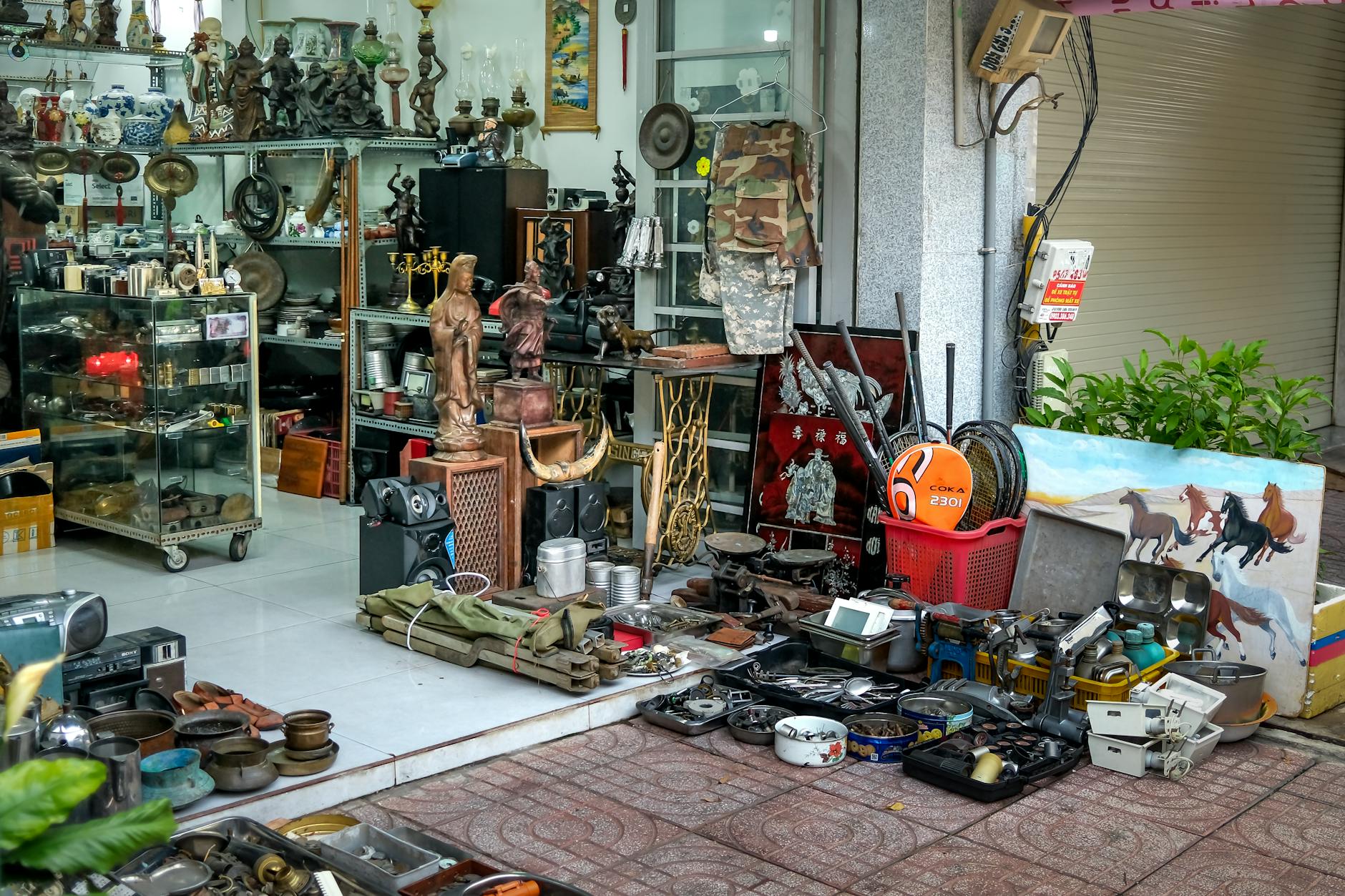
Asia's wealthiest collectors are pivoting from traditional trophies to fashion archives, prehistoric fossils, and fractional ownership of rare objects. This shift prioritizes personal resonance, absolute scarcity, and the thrill of acquiring unique items.
Why Collectibles Are the New Weekend Obsession for Asia's Ultra-Wealthy
There is a particular kind of pleasure reserved for those who know what they are looking at. Across Hong Kong, Tokyo, Singapore, and Seoul, a quieter but more electrifying collecting culture is taking hold — one driven not by the familiar logic of trophy assets but by rarity, personal resonance, and the sheer thrill of owning something genuinely singular. Knight Frank's 2026 Wealth Report signals that the stabilising broader market is giving sophisticated collectors permission to follow curiosity rather than convention, and nowhere is that curiosity more refined — or better funded — than among Asia's ultra-high-net-worth community.
What has changed is not appetite but direction. The same collectors who once competed fiercely for blue-chip contemporary paintings are now spending long weekends at specialist viewings for Jurassic-era ammonites, archive pieces from Maison Margiela's earliest runway seasons, and fractional stakes in objects that would otherwise sit beyond any single buyer's reach. The weekend, once reserved for yacht charters and resort check-ins, has quietly become the preferred window for serious collecting.
Fashion Archives: Where Couture Becomes a Cabinet of Curiosities
The appetite for fashion as a collectible — not merely as wearable luxury but as cultural artefact — has matured considerably. Christie's Hong Kong and Sotheby's dedicated fashion sales now draw serious bidders who approach a 1997 Galliano-era Dior bias-cut gown with the same analytical rigour once reserved for Ming dynasty ceramics. Provenance, condition, and cultural moment are the metrics that matter, and prices for genuinely rare archive pieces have climbed accordingly, with select lots exceeding HK$500,000 at recent specialist sales.
For those who prefer the intimacy of a private gallery over the adrenaline of a live auction room, Tokyo's Omotesando district has become a discreet hub for curated vintage couture, where appointment-only viewings feel closer to a museum experience than a retail transaction. The weekend collector here is building something closer to a personal museum than a wardrobe.
Christie's Hong Kong
📍 22/F Alexandra House, 18 Chater Road, Central, Hong Kong
📞 +852 2760 1766
🌐 Website
Fossils and Natural History: The Most Ancient Form of Rarity
If fashion archives represent culture crystallised, fossils represent time itself made tangible. The natural history collecting market has expanded dramatically across Asia, with Singapore and Shanghai emerging as particularly active centres for Cretaceous specimens, meteorite slices, and museum-quality mineral formations. A Tyrannosaurus tooth or a perfectly preserved trilobite from the Cambrian period occupies a category entirely its own — it cannot be reproduced, it cannot be faked at scale, and its story predates human civilisation by hundreds of millions of years.
Specialist dealers such as The Natural History Auction House, which operates preview events in Singapore and Hong Kong, have noticed a marked increase in first-time buyers from Southeast Asia who arrive for a weekend and leave with something that required 65 million years to produce. The collecting logic is impeccable: absolute scarcity, zero correlation to financial markets, and a conversation piece that stops every guest in their tracks.
- Entry-level specimens: Polished ammonites and shark teeth from approximately USD 800
- Mid-range highlights: Museum-quality mosasaur jaw sections from USD 15,000–40,000
- Headline lots: Complete small theropod skeletons have achieved USD 200,000+ at regional specialist sales
Fractional Ownership: Collecting Without Compromise
Perhaps the most structurally interesting development is the quiet rise of fractional collecting — platforms and private syndicates that allow multiple buyers to co-own a single exceptional object, from a Patek Philippe Reference 2499 to a Qing dynasty imperial robe. This is not timeshare logic applied to art; it is a recognition that the most compelling objects in any category now command prices that make sole ownership impractical even for the seriously wealthy. Fractional structures, managed through specialist platforms operating out of Singapore and Hong Kong, offer verified provenance, professional storage, and defined exit windows.
The social dimension is underestimated. Co-owners often meet for private viewings at bonded storage facilities or rotate display rights, turning what might have been a solitary acquisition into a collector's circle with its own rituals and conversations. For the Asia-based UHNW reader who already owns the villa and the yacht charter, this is the weekend experience that money alone cannot simply book.
Frequently Asked Questions
Where can I attend specialist fossil and natural history auctions in Asia?
Singapore and Hong Kong host the most active natural history preview events in the region. Specialist dealers and auction houses including Sotheby's natural history divisions hold periodic sales, and private dealers often operate by appointment in both cities. Checking Christie's and Sotheby's event calendars ahead of a planned weekend trip is the most reliable approach.
How does fractional ownership of luxury collectibles work in practice?
Fractional collecting platforms pool capital from multiple buyers to acquire a single high-value object. Each co-owner holds a verified stake, the object is professionally stored and insured, and the platform manages authentication, valuation, and eventual resale. Several Singapore-based platforms now operate in this space with minimum entry points from around USD 10,000 per fractional share.
Is fashion archive collecting taken seriously at major auction houses in Hong Kong?
Yes. Christie's Hong Kong and Sotheby's both now run dedicated fashion and luxury archive sales that attract serious collectors rather than fashion enthusiasts. Pieces with strong provenance — original runway documentation, designer signatures, or celebrity ownership history — command significant premiums and are treated with the same curatorial rigour as fine art.
What makes a collectible genuinely rare versus simply expensive?
True rarity means an object cannot be reproduced, replicated, or substituted. A fossil is rare because geological time cannot be manufactured. An archive couture piece is rare because the cultural moment that produced it has passed. Expense alone does not confer rarity — it is the combination of irreproducibility, provenance, and condition that defines a collectible worth pursuing.